
The Ultimate Cigar Size, Shape, and Color Guide: Mastering Vitolas & Wrappers
Cigars come in a diverse array of shapes, sizes, and colors, each contributing to a unique smoking experience. For a beginner, walking into a walk-in humidor can feel overwhelming with hundreds of distinct vitolas staring back at you. However, understanding how structural measurements and wrapper fermentation dictate burn mechanics, flavor delivery, and time commitment can completely transform how you select your next stick.
This comprehensive guide will delve into the intricacies of cigar shapes, sizes, and colors, providing you with high-value technical insights to help you choose the perfect cigar for any occasion.
Cigar Shapes (Vitolas) Explained
Cigar shapes, traditionally known as vitolas, are broadly categorized into two primary structural frameworks: Parejos and Figurados. The geometry of a cigar drastically dictates your smoking experience. A shape controls how the smoke channels toward your palate, how the internal combustion temperature behaves, and how the flavors transition from the first light to the final third.
Parejo Cigars: The Classic Straight Edge
Parejos are the most common cigar shapes, characterized by their perfectly straight parallel sides, open cylindrical foot, and a capped, rounded head. Because the internal air channels (draw paths) are uniform from end to end, Parejos provide a highly consistent, predictable burn rate and linear flavor development, making them the ultimate standard for both daily enthusiasts and beginners.
When you picture a fine cigar, chances are this is the shape that comes to mind. From Joe Burrow to Tony Soprano to Arnold Schwarzenegger, plenty of icons have been seen enjoying Parejos, even if you never knew the technical term.

Robusto
The Robusto cigar size is the undisputed king of premium tobacco sales in the United States. Typically measuring 4.75 to 5.5 inches in length with a ring gauge of 48 to 52, Robusto cigars offer a balanced 45 to 60-minute smoking time. Because of its relatively thick diameter, a Robusto burns cool and slow, delivering a rich, full-bodied smoke without heating up too quickly or overwhelming the palate.

Corona
The Corona is traditionally considered the factory benchmark for all cigar sizes; it is the scale against which master blenders taste-test their new tobacco concepts. Measuring precisely around 5.25 to 6 inches in length with a slender ring gauge of 42 to 44, Coronas feature a higher ratio of outer wrapper leaf to internal filler tobacco. This creates a slightly hotter burn that emphasizes the exact flavor profile of the wrapper leaf rather than the filler blend.

Churchill
Named after the legendary British Prime Minister Winston Churchill, this classic size is substantially larger, typically measuring 7 inches long with a ring gauge of 47 to 50. The Churchill cigar size requires a time investment of 90 to 120 minutes. The immense length acts as a natural cooling filter for the smoke, allowing for a highly complex, progressive evolution of flavors as essential oils build up along the long filler track.

Figurado Cigars: The Artful Taper
Figurados are any cigars rolled with irregular, non-parallel shapes. Because their shapes require highly advanced rolling skill, master torcedores (cigar rollers) handle production. Figurados alter the smoking experience dynamically by compressing or expanding the airflow, resulting in an evolving concentration of flavor notes that change distinctly from the first inch to the final third.

Torpedo
The Torpedo features straight parallel walls identical to a Parejo, but terminates in a sharply pointed, uniform head. This aggressive taper acts as a functional funnel for the smoke. By cutting a small opening on the pointed cap, you concentrate the smoke directly onto a precise area of your tongue, intensifying the perception of strength and flavor oils.

Belicoso and Pyramid
While often confused with the Torpedo, a **Belicoso** features a much shorter, rounded taper at the head, providing a slightly wider draw. A **Pyramid** features a continuous taper along the entire body of the stick, starting with a wide, flared open foot and narrowing down gradually to a pointed tip. This design yields a light, airy draw initially that concentrates in richness and temperature as you smoke down the taper.

Perfecto
The Perfecto is a masterclass in tobacco architecture, featuring a tapered closed head, a distinct bulge in the center body, and a sharply pinched closed foot. When lighting a Perfecto, you initially taste only the burning wrapper and binder leaves at the tiny tip. As the burn line hits the thick, central bulge, the flavor notes burst open as the full filler blend ignites, before tapering down again at the end.

Culebra
The Culebra cigar is easily the most eccentric shape in the industry. It consists of three individual, wet-rolled Panatela cigars twisted and braided together like a rope, secured by twine or a single band. Historically, this format allowed factory owners to track their rollers' daily personal allowances, preventing them from taking premium production cigars home.
To smoke a Culebra, you must unbraid the trio and smoke an individual, crooked stick on its own. The sharp bends and ripples create pocketed air channels that yield a surprisingly smooth, cool draw and serve as an incredible conversation piece, out-shining even a luxury box pressed cigar.

The Mechanics of Cigar Sizes
Cigar sizes are strictly defined by two dimensions: length (measured in inches) and ring gauge (measured in 64ths of an inch). For example, a cigar with a 64 ring gauge has a physical diameter of exactly one inch.
The core rule of ring gauge mechanics is simple: **slender ring gauges burn hotter and emphasize wrapper flavor, while thick ring gauges burn cooler and emphasize complex filler blends.** Let’s break down the classic sizing frameworks:
Toro
Measuring 6 inches long with a robust ring gauge of 50 to 55, the Toro cigar size has quickly overtaken older sizes to become a modern standard. It offers a solid 75-minute smoke that strikes an ideal compromise between a cool burn and a highly balanced ratio of wrapper-to-filler flavor oils.
Double Corona
An imposing vitola reaching 7.5 to 8.5 inches in length with a ring gauge of 49 to 52. These mammoth cigars are engineered for long, dedicated relaxation settings where the slow, cool burn permits the deep transitions of well-aged filler leaf to display structural flavor developments over two hours.
Petit Corona
The mini alternative to the standard Corona, spanning roughly 4.5 inches with a narrow 40 to 42 ring gauge. It delivers a fast, highly concentrated punch of flavor within 30 minutes, keeping the experience brief yet rich.

Lancero
The favorite vitola of elite tobacco blenders and rolling purists. Spanning 7 to 7.5 inches with an incredibly narrow ring gauge of 38 to 40, Lanceros are notoriously difficult to roll without plugging the airflow. Because there is so little space for filler tobacco, your palate tastes the distinct, unadulterated flavor profile of the wrapper leaf.
Lonsdale
An elegant mid-point between a Corona and a Churchill, typically landing at 6.5 inches long with a 42 to 44 ring gauge. It provides traditionalists with a long, clean burn profile that isolates individual blend transitions perfectly.
Panatela
A long, ultra-slender vitola ranging from 5 to 7.5 inches with a thin ring gauge of 34 to 38. These vintage profiles provide quick-burning, highly intense flavor bursts centered around the outer leaf profile.
Presidente / Gigante
Massive modern formats. Presidentes span 8 to 10 inches with ring gauges reaching past 52, while modern **Gigantes** or **60-Ring** sticks focus on an ultra-cool, slow-burning intake that produces large, dense volumes of mild smoke over a lengthy duration.
The Ultimate Cigar Size Chart
| Standard Vitola Name | Length Range (Inches) | Ring Gauge (64ths of an Inch) | Average Smoke Time |
| Petit Corona | 4.5 | 40 to 42 | 30 - 40 Mins |
| Corona | 5.5 to 6 | 42 to 44 | 45 - 60 Mins |
| Panatela | 5.5 to 7.5 | 34 to 38 | 45 - 60 Mins |
| Lonsdale | 6.5 | 40 to 42 | 60 - 70 Mins |
| Lancero | 7 to 7.5 | 38 to 40 | 60 - 75 Mins |
| Robusto | 4.5 to 5.5 | 48 to 52 | 45 - 60 Mins |
| Toro | 6 to 6.5 | 48 to 54 | 75 - 90 Mins |
| Churchill | 6.5 to 7 | 46 to 50 | 90 - 120 Mins |
| Presidente | 7 to 8.5 | 52 to 60 | 100 - 120 Mins |
| Gigante | > 6 | > 60 | 90 - 120+ Mins |
Cigar Colors: Wrapper Classifications
The outermost leaf wrapped around a cigar is its engine for flavor, accounting for anywhere from 60% to 90% of the overall tasting profile. The color of a wrapper is a visual roadmap showing how the tobacco leaf was grown (shade vs. sun) and the exact duration and temperature of its post-harvest fermentation process.
While there are dozens of minor shade variations sorted by eye in factories, wrappers fall into seven primary color classifications across a spectrum of light to dark:

Candela (Double Claro)
Distinguished by its vibrant, distinct bright green appearance. To achieve this, growers harvest the leaf before maturity and fire-dry it quickly in specialized barns. This rapid heat locks in the leaf’s natural chlorophyll before it can break down. Candela wrappers are exceptionally mild, yielding a light, fresh-cut grass aroma, cedar sweetness, and practically zero peppery spice.
Claro (e.g., Connecticut Shade)
A beautiful light-tan, pale cream wrapper leaf. These leaves are typically grown under massive nylon cheesecloth tents to protect the delicate tobacco from direct sunlight, keeping the veins thin and sugar levels mild. Claro wrappers offer a buttery, creamy profile with subtle notes of white pepper, toasted nuts, and cedar wood—the textbook choice for morning smokes paired with coffee.
Colorado Claro / Natural
A medium tawny brown or golden-honey shade. Frequently grown under natural, diffused cloud covers (like Ecuador Connecticut), these leaves stay on the plant slightly longer to develop deeper essential oils, yielding woodsy notes with a slightly crisp, spicy finish.
Colorado
A stunning, distinctive reddish-brown leaf. These sun-grown wrappers undergo full maturation, yielding a highly aromatic, oily, medium-bodied smoke rich with notes of leather, nutmeg, and damp earth. They strike a perfect balance between woodsy sweetness and robust pepper spice.
Colorado Maduro
Dark brown with deep, rich highlights. This wrapper represents a cross-over point where extended fermentation begins caramelizing natural sugars inside the leaf tissue, resulting in deep, earthy undertones balanced by a smooth, lingering peppery kick.
Maduro
A rugged, thick leaf ranging from deep coffee brown to near-jet black. To achieve a true Maduro wrapper, the tobacco undergoes extensive, high-humidity fermentation piles for months or years. This heavy sweating process forces out harsh impurities while elevating natural sugars. Maduros are rich, medium-to-full-bodied profiles carrying distinct tasting notes of dark chocolate, molasses, and espresso beans.
Oscuro (Double Maduro)
The absolute darkest wrapper available—nearly black, carrying a rustic, matte texture. Left at the very top of the tobacco plant to receive maximum sun exposure, these heavy leaves undergo extreme, long-term fermentation. Oscuros provide an intensely bold, syrupy smoke bursting with dark baking spices, heavy oak, and deep dark-cocoa sweetness preferred by experienced palates.
A Strategic Framework for Choosing Your Cigar
To pick the perfect stick out of your collection or local retail shelf, map your decision against these three variables:
- Your Schedule (Time Allocation): Never rush a premium smoke. If you only have 30 minutes on your lunch break, pick a short Petit Corona or an elegant Panatela. Save massive Churchills, Toros, and Presidentes for open-ended evenings or golf courses where you can smoke at a proper, unhurried cadence. For extreme time constraints, a brief premium machine-made alternative like a Swisher Sweet can fit a quick window.
- Palate Preference (Flavor Intensity): Lighter wrappers (Claro/Candela) favor mild, creamy, and herbal flavor targets. Darker wrappers (Maduro/Oscuro) drive full-bodied sweetness, espresso, and bold pepper profiles. Match your wrapper choice to your beverage pairing (e.g., Claro with light coffee; Maduro with dark rum or stout).
- Experience Comfort (Airflow Stability): If you are new to smoking, choose a classic Parejo like a Robusto or Toro. Their wide, uniform construction guarantees a smooth, easy draw. As your palate and lighting skills progress, transition into tapered Figurados like Torpedos or Perfectos to explore how changing shapes shift flavor concentrations.
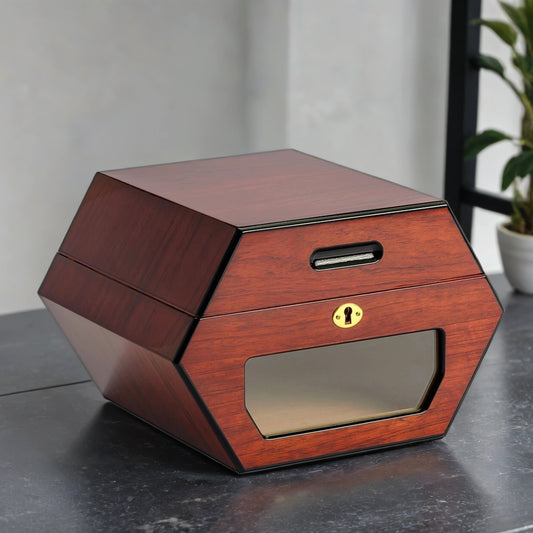
No matter which vitola and wrapper blend you choose, proper storage is critical. Premium cigars lose their delicate essential oils and dry out completely within 72 hours if left unprotected. Keep your collection safely aging inside a high-quality electric humidor or cedar desktop humidor maintained at a precise 65% to 70% relative humidity framework to guarantee a pristine smoke every time.
FAQ: Cigar Shapes, Sizes, and Colors
What are the most popular cigar shapes and sizes?
The Robusto (5" x 50), Toro (6" x 52), and Churchill (7" x 48) are the most popular sizes globally. Robustos are favored for delivering full-blend flavor profiles in a condensed timeframe, Toros provide a balanced modern smoke, and Churchills are the definitive choice for long, relaxed smoking sessions.
How many distinct types of cigars exist?
While there are two foundational shapes (Parejos and Figurados) and seven core wrapper colors, there are hundreds of custom combinations. When you factor in proprietary factory sizes, regional tobacco leaf origins, and unique binder/filler configurations, the variations run into the thousands.
Does a darker wrapper color mean a cigar is physically stronger?
Not necessarily. A dark Maduro or Oscuro wrapper signifies a high sugar content and deep flavor complexity (like chocolate and espresso), but the actual *nicotine strength* of a cigar is determined primarily by the internal filler leaves. A light-colored Claro cigar packed with heavy Ligero filler leaves can be significantly stronger than a dark Maduro cigar rolled with mild filler tobacco.
What is the structural difference between cigar shapes and cigar types?
Cigar shapes refer strictly to the physical geometry of the stick (such as a straight Parejo or a tapered Torpedo). A cigar "type" is the comprehensive combination of that specific shape, its exact ring gauge dimensions, and the unique seed country origins used to blend the wrapper, binder, and filler leaves.
Why does the ring gauge size matter to the overall flavor?
The ring gauge dictates the temperature of the ember and the wrapper-to-filler ratio. Slender ring gauges burn slightly hotter and allow the wrapper leaf to dominate your taste buds. Thick ring gauges burn significantly cooler, allowing master blenders to combine up to five or six different filler leaves for deep, layered flavor transitions.