
How to Store Cigars Without a Humidor: The Emergency Guide
We have all been there: you are gifted a premium box of cigars, or you splurge on a few rare sticks, only to realize your humidor is full, seasoned incorrectly, or hasn't arrived yet.
A premium cigar will begin to lose its essential oils and structural integrity within 48 to 72 hours of being exposed to open air. To save your collection, you need to act fast. Below is the "triage" protocol for storing cigars based on how much time you need to buy.
Strategy 1: The 72-Hour Fix (The Ziploc Method)
If you only need to keep your cigars safe for a few days, a heavy-duty freezer bag is your best friend. Standard sandwich bags are too thin and porous; you need a bag with a high-quality "double-zip" seal.
- The Setup: Place your cigars in the bag. If you have a Boveda pack, drop it in.
- The "Sponge" Caveat: If you don't have a humidification pack, use a tiny piece of a new, clean sponge dampened with distilled water.
- The Expert Tip: Wrap the damp sponge in a piece of plastic wrap with small holes poked in it. Never let the sponge touch the cigars directly, as this will cause "localized over-humidification" and ruin the wrapper.
Strategy 2: The 2-Week Fix (The Tupperdor Lite)
If you need to store your cigars for more than a few days, a plastic bag won't cut it. You need a hard-sided food storage container with a rubber or silicone gasket. For a full breakdown, see our DIY Tupperdor Guide.
- The Setup: Wash the container thoroughly with unscented soap to ensure no food smells linger. Place your cigars inside with a humidification source.
- Maintenance: Open the container once every few days to allow for a quick gas exchange.

Strategy 3: The Large Collection Fix (The Coolerdor)
If you have inherited a full box or more and have no humidor, a clean, plastic picnic cooler is the ultimate "emergency room." Coolers are insulated and designed to be airtight, making them better than any cardboard box or drawer.
- The Setup: Place a calibrated hygrometer and your humidification source inside.
- The Advantage: The insulation protects the cigars from temperature swings that can hatch tobacco beetles.
Why the "Original Box" is a Trap: A common mistake is assuming the wooden box the cigars came in will keep them fresh. It won't. Most cigar boxes are made of porous wood designed for display. In a dry room, that wood acts as a "wick," sucking moisture out of your cigars. If you are keeping cigars in their original box, you must place the entire box inside a larger airtight container.
The "Cigar Death" Hall of Fame (What NOT to do)
To protect your tobacco, avoid these three "solutions" at all costs:
- The Refrigerator: A fridge is a dehumidifier designed to pull moisture out of the air. It will turn your premium cigars into dry twigs in 24 hours.
- Tap Water: Never use tap water on a sponge. Chlorine and minerals introduce "off" flavors and lead to mold. Always use distilled water.
- The Window Sill: Sunlight causes "thermal shock." It will bake the oils out of the wrapper and cause the cigar to split open.
Moving Toward a Permanent Solution
While these triage methods work in a pinch, they are not designed for the long-term aging of tobacco. A plastic bag cannot provide the Spanish Cedar benefits or the "breathability" that a real humidor offers.
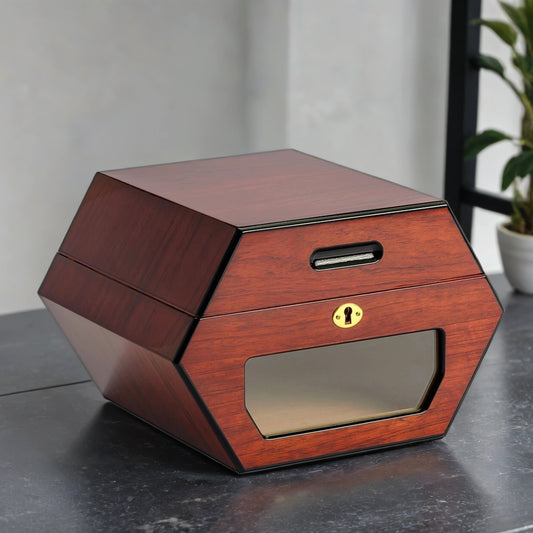
If you are ready to stop worrying about "emergency fixes" and start properly aging your collection, it is time to invest in a dedicated environment. Our premium humidors are engineered with thick-wall cedar and precision seals to ensure your cigars don't just survive, they improve with age.